
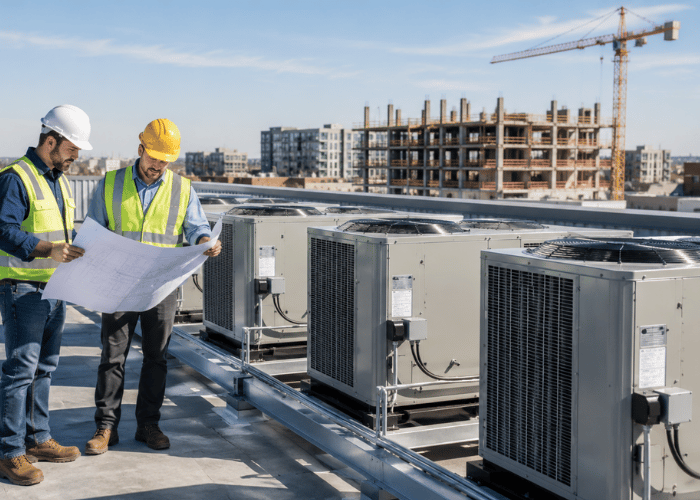
Every successful construction project starts long before the first piece of equipment arrives on site. Whether it is a new residential development, a multifamily property, or a commercial renovation, careful planning often determines whether a project stays on schedule or falls behind.
One area that is frequently overlooked during the planning process is mechanical equipment. Heating and cooling systems are among the most important components of any building, yet many contractors and property owners wait until late in the project to secure the equipment they need. When inventory becomes limited during peak seasons, delays can quickly affect installation schedules, inspections, and occupancy timelines.
The most efficient projects are often the ones where equipment procurement is considered early. By identifying system requirements ahead of time, builders can avoid unnecessary surprises and maintain better control over costs. This approach also provides greater flexibility when selecting equipment that meets the needs of the project.
According to the U.S. Department of Energy, heating and cooling account for a significant portion of energy use in both residential and commercial buildings. Understanding equipment options and efficiency standards can help property owners make more informed decisions during construction and renovation projects. More information can be found through the Department of Energy at https://www.energy.gov.
Another factor worth considering is long term operating performance. Modern HVAC equipment continues to evolve, with manufacturers focusing on improved efficiency, updated refrigerants, and system reliability. Programs such as ENERGY STAR provide valuable information for property owners who want to understand energy efficient equipment options. Additional resources are available at https://www.energystar.gov.
For contractors working in the Philadelphia area, equipment availability is often just as important as equipment specifications. During busy seasons, finding inventory quickly can make the difference between completing a project on time and dealing with unexpected delays. Having access to local inventory allows contractors to respond faster when schedules change or additional equipment is needed.
This is especially true when sourcing components such as condensers, coils, furnaces, and air handlers. Contractors looking for AC condensers Philadelphia often prioritize suppliers that maintain inventory throughout the year and can provide equipment when projects demand it.
Environmental considerations are also becoming increasingly important across the construction industry. Updated refrigerant requirements and evolving efficiency standards continue to influence purchasing decisions. The Environmental Protection Agency provides guidance regarding refrigerants, efficiency initiatives, and environmental best practices through its resources at https://www.epa.gov.
Strong project management is ultimately about reducing uncertainty. When materials, equipment, and schedules are coordinated from the beginning, contractors gain more control over timelines and budgets. This allows teams to focus on quality workmanship rather than scrambling to solve supply challenges during critical stages of construction.
As building technology continues to advance, planning ahead remains one of the most valuable strategies available to developers, contractors, and property owners. Reliable suppliers, informed equipment decisions, and proactive scheduling all contribute to smoother projects and better outcomes.