A search for the largest mixed-use project in Thailand tends to turn up more than one confident answer. That is not really inconsistency or marketing spin, rather a reflection of the fact that largest gets measured in at least three different ways across the industry, and different projects lead depending on which measure is applied. Understanding those measures is more useful than chasing a single ranking, since each one tells a buyer or observer something genuinely different about a development.
Three Ways to Measure Largest
Investment value is the figure most commonly quoted in press coverage and developer announcements, measured in billions of Thai baht committed to a project across its full construction timeline. It captures ambition and financial scale, though it says relatively little on its own about a project’s physical footprint.
Gross floor area, the total built space across all structures on a site, matters more for dense vertical developments. A tower complex can generate an enormous amount of floor area from a comparatively small parcel of land, simply by building upward rather than outward.
Land area, typically measured in rai in Thailand, is the measure most relevant to master-planned communities designed around low-density living rather than height. A development spanning hundreds or thousands of rai can represent a fraction of the investment value or floor area of a dense central project, while still being, by land size alone, considerably larger.
Why the Metric Changes the Winner
None of these measures is more correct than the others. Each simply describes a different kind of development. A compact site in central Bangkok, built up rather than out, can post an enormous investment figure and floor area total on a land footprint of well under 100 rai, since height and density are precisely the point of that model. A peripheral, master-planned township, built on land that was affordable enough to acquire and assemble at scale, can span many times that footprint while representing a fraction of the investment value or built floor area of a dense downtown project.
Neither approach is a lesser version of the other. They answer different questions: how much retail, office, and hotel space can be packed into a single valuable urban site, against how much land can be organised into a complete, walkable community for residents. Comparing the two directly on any single number tends to obscure more than it reveals.
What Largest Actually Tells a Buyer
For someone evaluating a specific property, scale by itself indicates very little about quality, completeness, or fit. What matters is which measure of scale relates to what that buyer is actually looking for. A buyer prioritising space, privacy, and a self-contained lifestyle has good reason to care about a project’s land area, since that figure correlates most directly with plot size, density of neighbours, and the amount of green space and recreational infrastructure a development can support. A retailer, hotel operator, or corporate tenant evaluating a dense CBD project, by contrast, cares considerably more about floor area and footfall, since that figure correlates with commercial reach rather than residential lifestyle.
Where Thailand’s Largest-by-Land-Area Developments Are Located
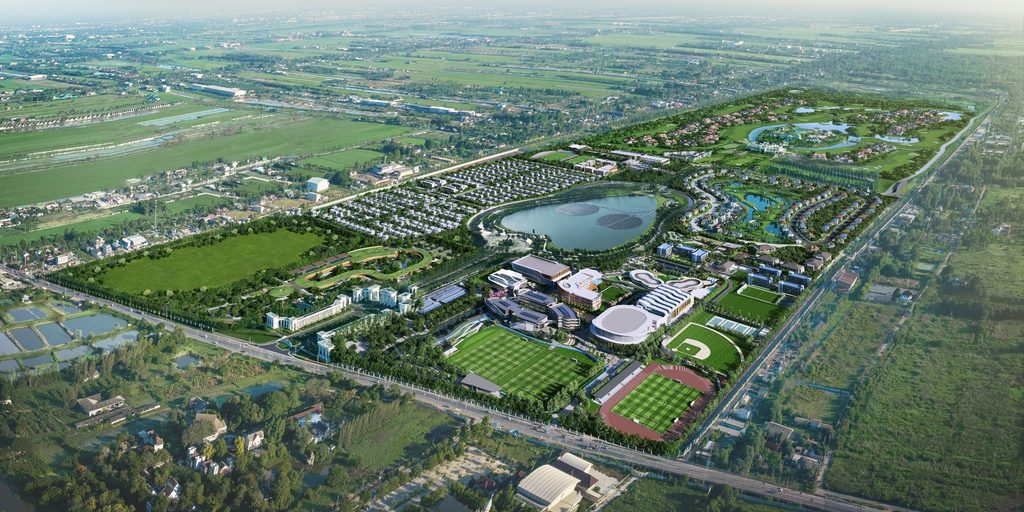
As land within Bangkok’s core has grown scarcer and more expensive, developers pursuing the largest possible land footprint have generally moved toward the city’s periphery and surrounding provinces, where large contiguous parcels remain available at a viable cost. This is a structural pattern rather than a coincidence: central land supports height and value density, while peripheral land supports scale.
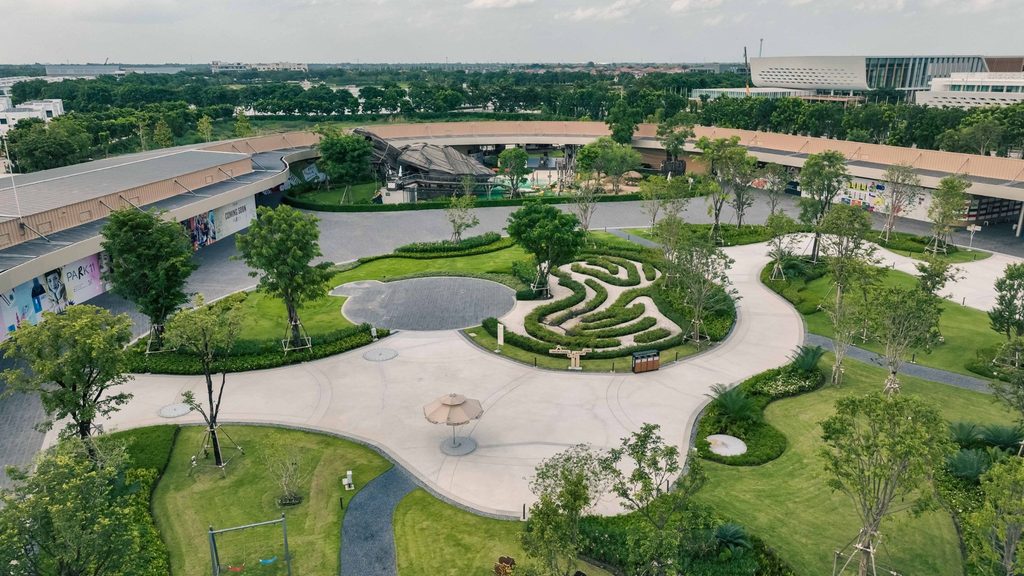
Reignwood Park, a 2,000-rai (approximately 800-acre) development in Lam Luk Ka, Pathum Thani, illustrates this pattern clearly. Measured by land area, it stands among the largest single-site residential developments in the country, and specifically the largest integrated luxury township, a scale and completeness that earned it the Thailand Mega Project of the Year distinction at the DOT Property Thailand Awards 2025.
The more useful question for anyone comparing large-scale developments in Thailand is rarely which one is the largest. It is largest by which measure, and whether that measure actually matters for what the buyer wants from the property. A project leading on investment value, floor area, or land area is answering three different questions, and only one of them is likely to be the one a given buyer is actually asking.
For more information about Reignwood Park and its residential collections in Lam Luk Ka, Pathum Thani, visit reignwoodpark.com or contact the team at [email protected] / +66 (0)2 978 8888.