
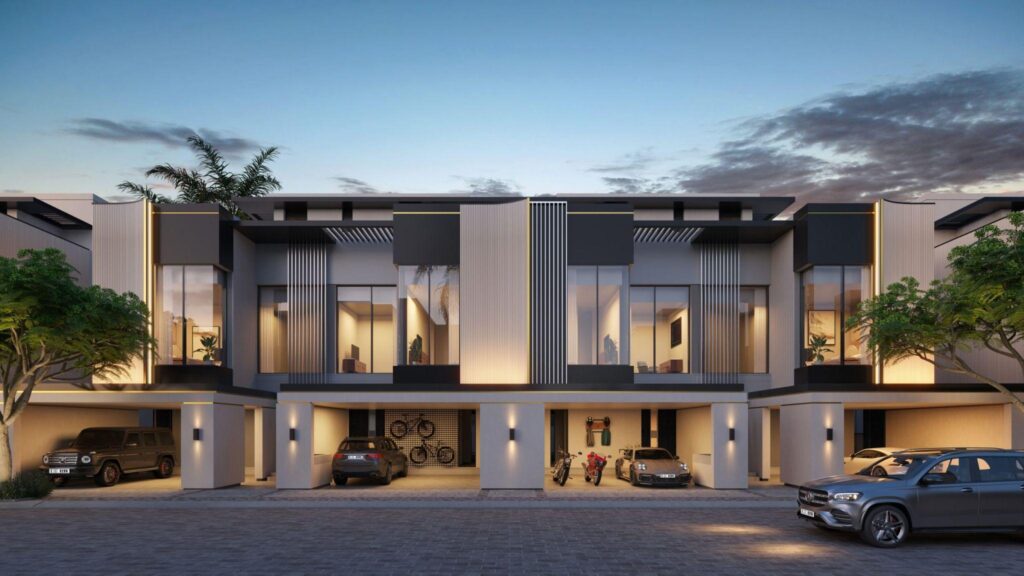
Almost every new community in Dubai calls itself family-friendly. The phrase appears on billboards, brochures and sales websites so often that it has started to lose its meaning. Yet for parents choosing where to raise children, the difference between a community that is genuinely built for families and one that simply claims to be can shape daily life for years.
A truly family-friendly community makes ordinary days easier. The school run is short, children can play outside safely, groceries are close by and neighbours become friends. This guide breaks down the features that matter most, how villas and townhouses compare for different families, and the questions worth asking before committing to a home.
Why Families Look to Villa and Townhouse Communities
Villa and townhouse communities offer something apartments rarely can: private outdoor space, room to grow and a quieter, lower-density setting. A garden becomes an extra playroom, separate floors give parents and children their own space, and streets designed around homes rather than towers tend to feel calmer and safer.
Space alone, however, does not make a community family-friendly. The surroundings matter just as much as the home itself, and the best communities are planned around how families actually live.
Seven Signs of a Truly Family-Friendly Community
1. Schools Within Easy Reach
For most parents, the school question comes first. A community with quality schools a short drive or walk away saves hours each week and reduces stress for the whole household. Nurseries matter too, especially for families with younger children.
In Dubai, private schools are inspected and rated by the Knowledge and Human Development Authority (KHDA), on a scale from Outstanding to Very Weak. Parents should check the latest published rating of any school near a shortlisted community, keeping in mind that full inspections were paused in June 2024, so many current ratings date from the 2023 to 2024 inspection round.
2. Streets Designed for Children
Family-friendly communities are designed to slow traffic down. Look for residential streets with traffic calming, continuous footpaths, safe crossing points and shaded walkways. Controlled entry points and visible security add further peace of mind, particularly for families with children who want to cycle or walk to a friend’s house.
3. Parks and Play Spaces Within Walking Distance
A park that requires a drive is a park that gets used less. The best communities place green spaces within a short walk of every home, with areas for different ages: shaded play areas for toddlers, open lawns for younger children and sports courts or cycling tracks for teenagers.
4. Daily Needs Close to Home
Supermarkets, pharmacies, clinics and cafes within easy reach make family routines far simpler. This idea sits at the heart of the Dubai 2040 Urban Master Plan, whose 20-minute city policy aims to give residents access to 80% of their daily needs and destinations within 20 minutes on foot or by bicycle. Communities that already follow this principle offer a clear advantage for busy households.
5. Layouts That Grow With the Family
A family-friendly home adapts as children grow. Useful features include enough bedrooms for the years ahead, a ground-floor guest room for visiting grandparents, a study for remote work or homework, generous storage and a garden that can be used most of the year. Open-plan living areas that connect to outdoor space help parents keep an eye on children while cooking or working.
6. A Real Sense of Community
Shared spaces such as community centres, clubhouses, pools and event lawns give neighbours a reason to meet. Regular community events, from weekend markets to seasonal celebrations, help new families settle in quickly and build friendships for both parents and children.
7. Well-Managed Upkeep
Clean streets, maintained landscaping and working shared facilities depend on good community management. Before buying, families should understand the service charges, what they cover and how well the community is maintained in practice. A short walk around existing phases often reveals more than any brochure.
Villa or Townhouse: Which Suits Which Family?
Both formats can work well for families. The right choice depends on budget, family size and how much upkeep the household is willing to take on.
|
Factor |
Townhouse |
Villa |
|
Entry price |
Usually lower |
Usually higher |
|
Outdoor space |
Smaller private garden or terrace |
Larger private garden, often room for a pool |
|
Privacy |
Shared walls with neighbours |
Detached, with more space between homes |
|
Maintenance |
Lighter upkeep |
More upkeep and higher running costs |
|
Often suits |
Young families and first-time buyers |
Larger or multi-generational families |
Many families start in a townhouse and move to a villa as children grow, which makes communities offering both formats especially practical. Moving within the same community keeps the same schools, friends and routines.
Questions Families Should Ask Before Buying
When comparing residential communities in Dubai, a careful site visit reveals far more than marketing material. These questions help separate genuinely family-friendly communities from those that only use the label.
- How long is the real school run? Drive the route at peak morning time, not at midday.
- What is already built? Distinguish completed parks, shops and facilities from those still planned for future phases.
- Where is the nearest park? Walk there from the shortlisted home and check shade, safety and condition.
- How are the streets used? Visit on a weekend evening to see whether children are outside playing and cycling.
- What do service charges cover? Ask for the current charges and what maintenance, security and amenities they include.
- What do residents say? Conversations with existing families often reveal the strengths and weaknesses that brochures leave out.
Choosing Family-Friendly Villa and Townhouse Communities in Dubai
A family-friendly community is not defined by a slogan. It is defined by short school runs, safe streets, parks within walking distance, daily needs close to home, homes that adapt as children grow and a community that feels welcoming from the first week.
Families who look beyond the brochure, visit at the times that matter and ask direct questions are far more likely to find a community that supports their routines for years to come. With the right choice, a villa or townhouse becomes more than a home: it becomes the setting for a childhood.