

Are you looking to upgrade your living space to a cutting-edge smart home?
Lighting innovations for smart and connected homes are making this possible right now. As LED technology and smart systems get even more sophisticated, your lights can do…
- Follow you around and adjust by themselves to your mood
- Save you money and help you reduce your energy consumption
- Make you healthier and more productive
… and it’s cheaper than you think.
Here are the contemporary lighting solutions we’re covering in this guide:
- Why Upgrading Lighting Is So Important
- Best Smart LED Lighting Systems That Work
- Best Human-Centric Lighting Innovations
- Lighting Control Features: Voice, Automation, And More
- Regional Lighting Styles and Preferences in Contemporary Design
Why Upgrading Lighting Is So Important
Smart lighting isn’t a passing fad — it’s a revolution that’s already here.
As the smart lighting market boomed from $27.3 billion in 2024 and now races toward $62.1 billion by 2030, the trends in contemporary lighting show no signs of slowing down anytime soon.
Why?
Consumers are buying in because they can see (and feel) the benefits. Improved sleep quality, reduced energy bills, enhanced security…
Compared to traditional lighting, smart light systems adapt and change to you all day long — from mimicking natural daylight when you’re most productive to creating warm and cozy atmospheres when it’s time to unwind.
Best Smart LED Lighting Systems That Work
The once garish LED lights of old are a thing of the past.
Advancements in semiconductor technology now allow LEDs to be fully integrated into the Internet of Things (IoT) as a platform. They connect to your smartphone, sync to your voice assistant, and interact with other smart home devices.
The contemporary LED systems we’re seeing feature:
Energy Efficiency — Cutting-edge LEDs use up to 80% less energy than traditional light bulbs, translating into enormous savings on your energy bills every month.
Longevity — They last for 50,000 to 100,000 hours. You won’t be changing them for years to come.
Personalization — Adjust brightness, color temperatures, even create your lighting scenes for specific activities or times of the day.
LED technology has also advanced to support miniaturization. Manufacturers are now producing slimmer, more sophisticated light fixtures that integrate with contemporary architectural design without the bulk.
Pretty amazing, right?
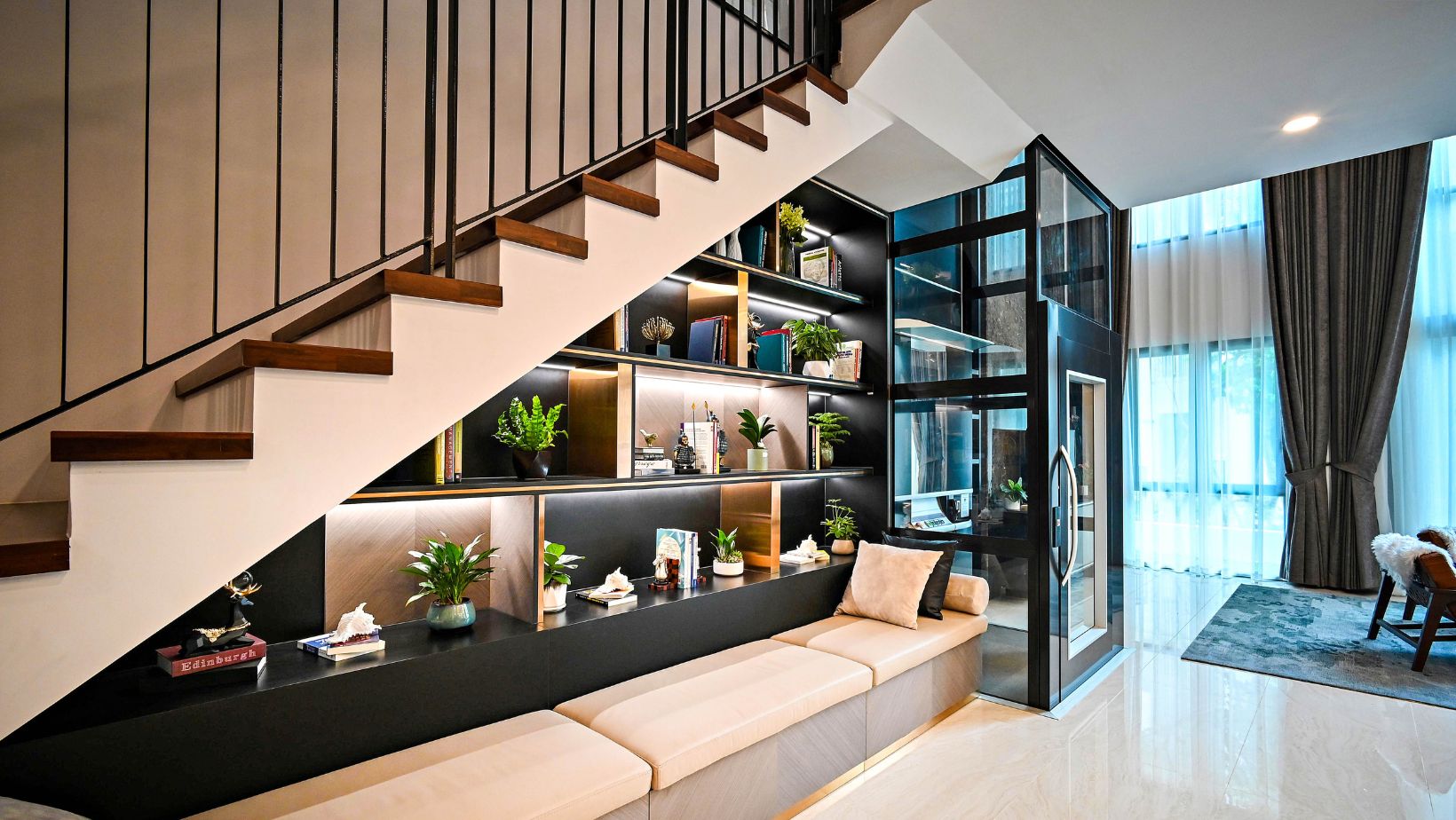
Regional Lighting Styles and Preferences in Contemporary Design
Interior contemporary lighting design varies from state to state in the US.
Styles and trends in one state may not match the preferences in your region. That’s why it’s so important to explore popular lighting styles in your area when you’re planning your interior design and high-tech lighting upgrades.
Coastal areas, for instance, often prefer cooler and brighter lighting that matches ocean views. Homes in the Midwest lean toward warmer temperatures for a cozy ambience during harsh winters.
In fact, the United States is the single biggest contributor to the North American market…
Claiming a 76.6% share of the market in 2024, American homeowners are by far the most dominant when it comes to smart lighting adoption.
Best Human-Centric Lighting Innovations
Ready to have your mind blown…
Human-centric lighting (HCL) systems are taking it to the next level.
By supporting your circadian rhythm, these smart lights automatically adjust the color temperature and intensity throughout the day to match the natural changes in sunlight.
Morning: Cool and bright lighting to wake you up and improve alertness. Afternoon: Neutral light to maintain focus and productivity. Evening: Warm and dimmer lights to prepare you for sleep.
The impact on health and productivity is notable. HCL can significantly improve sleep quality, mood, and cognitive performance.
What’s more…
Artificial intelligence (AI) is at the core of these systems. They learn your preferences over time and predict when you’ll need certain lighting conditions based on your daily habits.
Lighting Control Features: Voice, Automation, And More
Say goodbye to fumbling around in the dark looking for switches.
Voice-activated lighting controls are getting extremely sophisticated. Natural language processing (NLP) algorithms can now recognize complex commands and the context of a conversation.
Instead of basic on/off commands, you can now say, “set the mood for movie night” or “wake me up gently at 7 AM,” and your smart lighting will know exactly what to do.
But it doesn’t end there:
- Motion sensors to detect when someone enters the room
- Geofencing capabilities that turn on the lights as you arrive home
- Integration with security systems for added protection
- Scheduling to simulate occupancy while you’re away
Automation is the future. The more your lighting can seamlessly sync with other smart home systems, the more convenience and peace of mind you’ll have.
Wireless Vs. Wired Systems
Wireless or wired? It’s the age-old debate among tech enthusiasts and DIYers alike.
Wireless systems are usually more accessible to install and allow for a flexible setup. They use connectivity protocols like Wi-Fi, Bluetooth, Zigbee, or the newest Matter standard for cross-brand compatibility.
Wireless pros:
- No need for expensive rewiring
- Easier to do yourself
- Modular and expandable
- Lower upfront costs
Wired systems have their advantages, too. They offer more reliability and security. Hardwired lights are less susceptible to signal interference and hacking, making them the preferred choice for commercial applications and high-security areas.
The choice between the two largely comes down to your existing infrastructure and specific needs.
Color Tuning Technology
Want to instantly transform the look and feel of an entire room in your home?
Cutting-edge tunable white lighting technology allows you to shift color temperatures from a warm amber to a cool daylight range.
RGB systems take this a step further, providing millions of color possibilities.
The aesthetic is one thing — but did you know that different colors and temperatures can actually enhance your productivity for specific activities?
Blue-enriched white light in the morning will get your brain engaged and active for work. Warm amber tones later in the evening are proven to increase relaxation.
Hotels and restaurants have long been using lighting to manipulate customer mood and behavior. Now, you can do the same right at home.
Integration with Smart Home Ecosystems
Individual lighting systems don’t exist in a vacuum.
They’re a part of your broader smart home ecosystem that may include entertainment systems, climate control, security cameras, smart appliances, window treatments, and more.
The major unifying platforms like Apple HomeKit, Google Home, and Amazon Alexa allow all these systems to communicate and work together.
The result is a highly integrated smart home with incredible automation potential. When you start a movie, the lights dim, shades come down, and the temperature adjusts automatically — all without you lifting a finger.
What About Installation?
High-tech home lighting is a lot easier to install than many people think.
Most smart bulbs simply screw into your existing fixtures. No need for an electrician or wiring.
Some of the more advanced setups may require professional installation, but even they are straightforward.
The trick is to start small…
Replace a couple of bulbs in high-traffic areas. Get a feel for the benefits. Once you’ve experienced it for yourself, the natural next step is to expand to other areas in the house.
There are tons of smart lighting starter kits out there that include all you need to get going.
Future-Proofing Your Investment
Technology is always changing.
That’s why making sure your system is compatible with open industry standards like Matter is so important. Standards ensure your devices will be interoperable with future innovations and technologies.
Look for:
- Regular firmware updates
- Strong manufacturer support and reliability
- Expandable ecosystems and integrations
- Energy Star certification
Purchasing quality from the best brands helps future-proof against obsolescence.
The Bottom Line on Interior Contemporary Lighting
Lighting innovations for smart and connected homes are rapidly changing how we live.
Energy efficiency, health, productivity, convenience — the advantages of high-tech lighting systems are hard to ignore.
As the technology has matured, it’s become more accessible and surprisingly easy to set up and use.
Whether you’re building a brand new smart home or just upgrading an existing place…
Smart and connected lighting should be one of your top priorities. Start with one or two rooms and experience for yourself how responsive, connected lighting can change your life.
The future of home lighting is here, and it’s brighter, smarter, and more personalized than ever.